
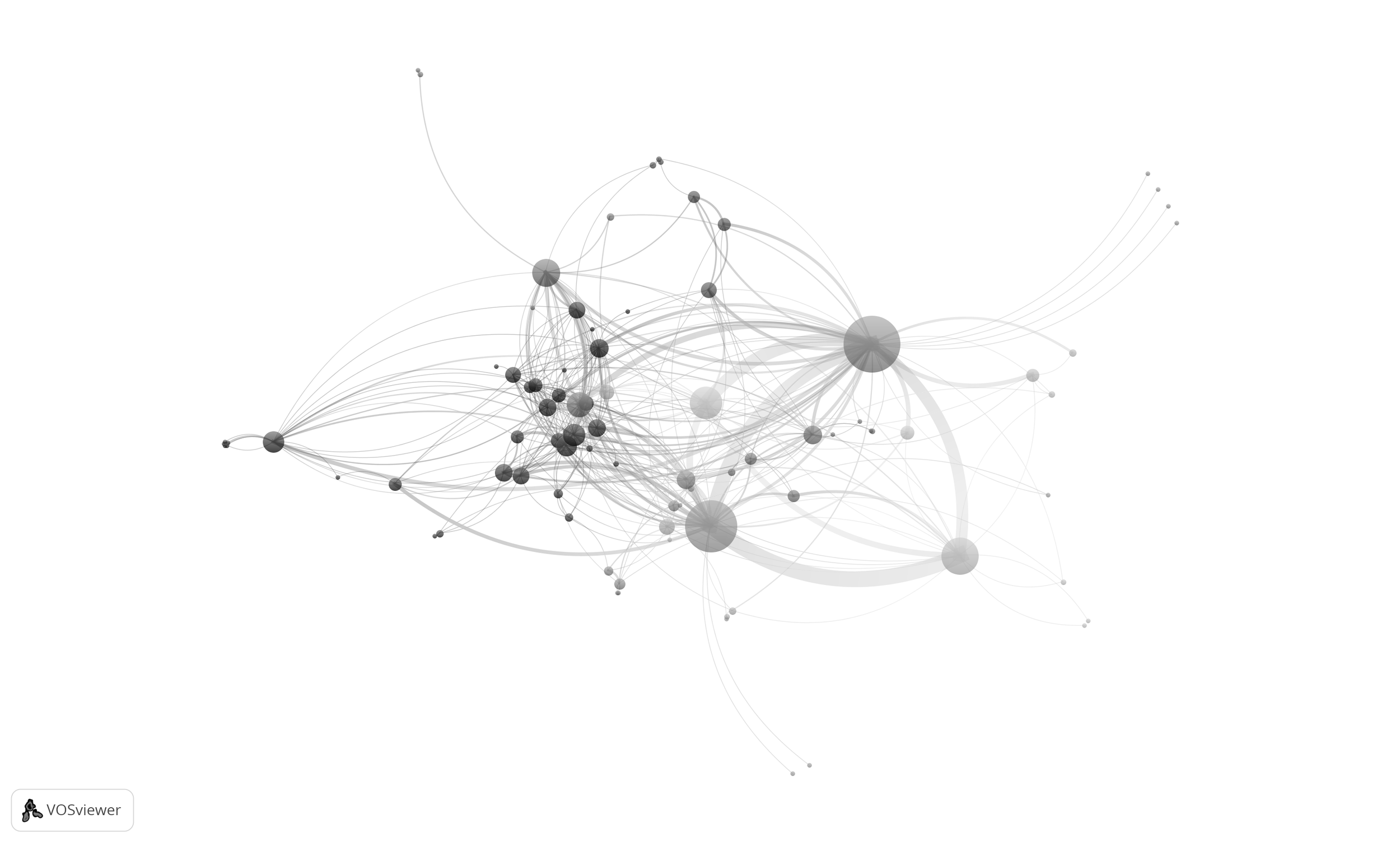
To gain this understanding, we have collected tech abuse research that has been published by academics, non-governmental organisations (including domestic abuse support organisations), those in industry, policy professionals, and (inter-)governmental agencies. These almost 3000 pieces of literature published up until the end of 2025 are being evaluated through a bibliometric analysis. This form of analysis is a quantitative method that is used to understand large amounts of scientific data. Here, we are employing methods of network analysis and topic modelling, and we aim to understand:
- The most prominent research themes within tech abuse,
- Collaboration patterns between authors,
- Research hubs using affiliate countries,
- Methodologies employed by researchers across sectors.
Our intention is to better capture the wide array of research being done in this area across the different disciplines and sectors. Specifically, we also hope to create a resource for tech abuse research that will further facilitate collaboration and consolidation to enhance understanding and prevention across disciplines.

Subscribe
Sign up to our monthly newsletter to receive news and updates.
We respect your privacy.